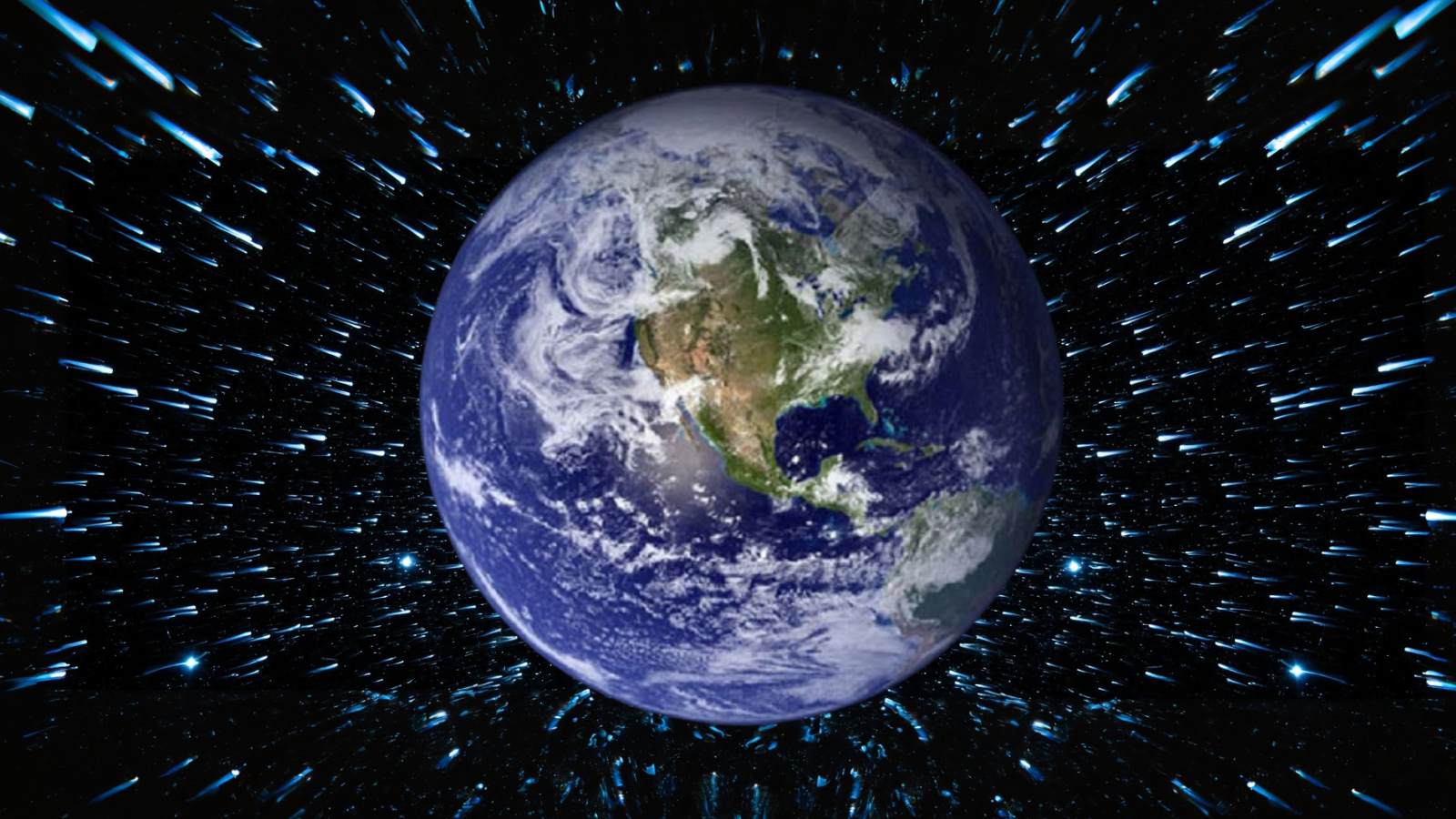
Earth's Existential Threats
Explore the cosmic and natural dangers that have shaped our planet's history and continue to pose risks to civilization through interactive data and visualizations.
Known NEOs
Asteroids > 1km
Trillion $ CME risk
Quakes on Ring of Fire
Major Events That Shaped Our Understanding
From ancient cataclysms to modern close calls, these events reveal the forces that have shaped—and threaten—life on Earth.
Chicxulub Impact
A ~10km asteroid struck the Yucatán Peninsula, releasing ~100 teratons of TNT. Created a 180km crater, triggered global firestorms, tsunamis, and an impact winter that led to the extinction of non-avian dinosaurs.
Carrington Event
The most intense geomagnetic storm in recorded history. A massive CME reached Earth in just 17.6 hours, causing auroras visible near the tropics and telegraph systems to spark and operate without batteries.
Tunguska Event
A ~60m asteroid or comet fragment exploded above Siberia with ~10-15 megatons of force, flattening 2,150 km² of forest. No crater was formed—this was a pure airburst explosion.
Indian Ocean Tsunami
A M9.1 earthquake off Sumatra triggered a devastating tsunami across the Indian Ocean, killing approximately 228,000 people in 14 countries—one of the deadliest natural disasters in recorded history.
Chelyabinsk Meteor
A ~20m asteroid entered the atmosphere at 19 km/s and exploded with ~500 kilotons of energy over Russia. The shockwave damaged 7,000+ buildings and injured over 1,600 people, mostly from shattered glass.
DART Mission Success
NASA's Double Asteroid Redirection Test successfully altered the orbit of asteroid Dimorphos by 32 minutes—far exceeding the 73-second threshold. The first demonstration that humanity can deflect an asteroid.
Near-Earth Object Data
NASA has cataloged over 41,900 Near-Earth Objects. Explore the data on asteroid sizes, orbital classifications, and discovery trends.
NEOs by Size Category
Distribution of known Near-Earth Asteroids by diameter
Catalog Completeness
Estimated percentage of NEAs discovered vs remaining
NEO Discovery Trend
Cumulative known Near-Earth Objects over time
Six Existential Dangers
From cosmic impacts to geological upheaval, these are the forces capable of reshaping civilization or ending it altogether.
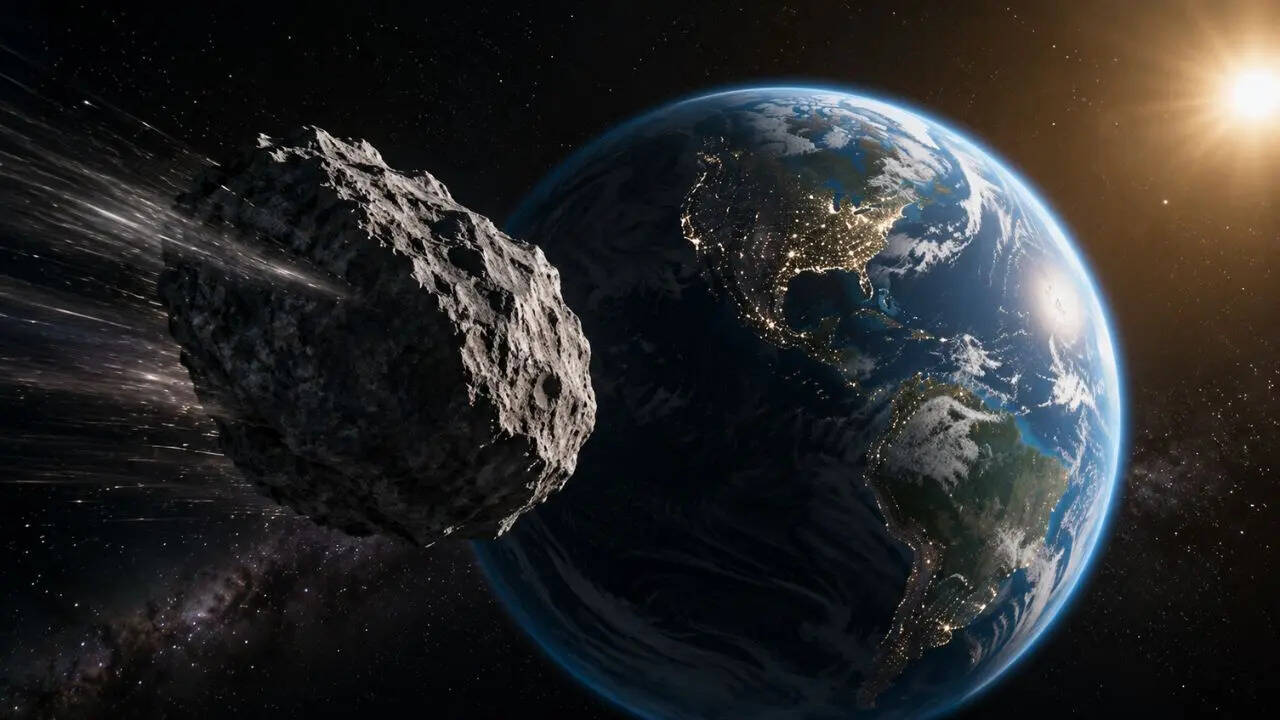
Asteroid Impact
A large asteroid collision could release energy equivalent to billions of nuclear weapons, triggering global firestorms, tsunamis, and an "impact winter" blocking sunlight for years.

Solar Superstorm
A Carrington-class coronal mass ejection could induce massive geomagnetic currents, destroying power transformers and disabling satellites, communications, and GPS worldwide.

Mega-Earthquake
Megathrust earthquakes along subduction zones can exceed M9.0, devastating entire regions and triggering catastrophic tsunami cascades across ocean basins.

Mega-Tsunami
Triggered by submarine earthquakes, volcanic collapses, or asteroid ocean impacts, mega-tsunamis can send walls of water hundreds of meters high across coastlines.
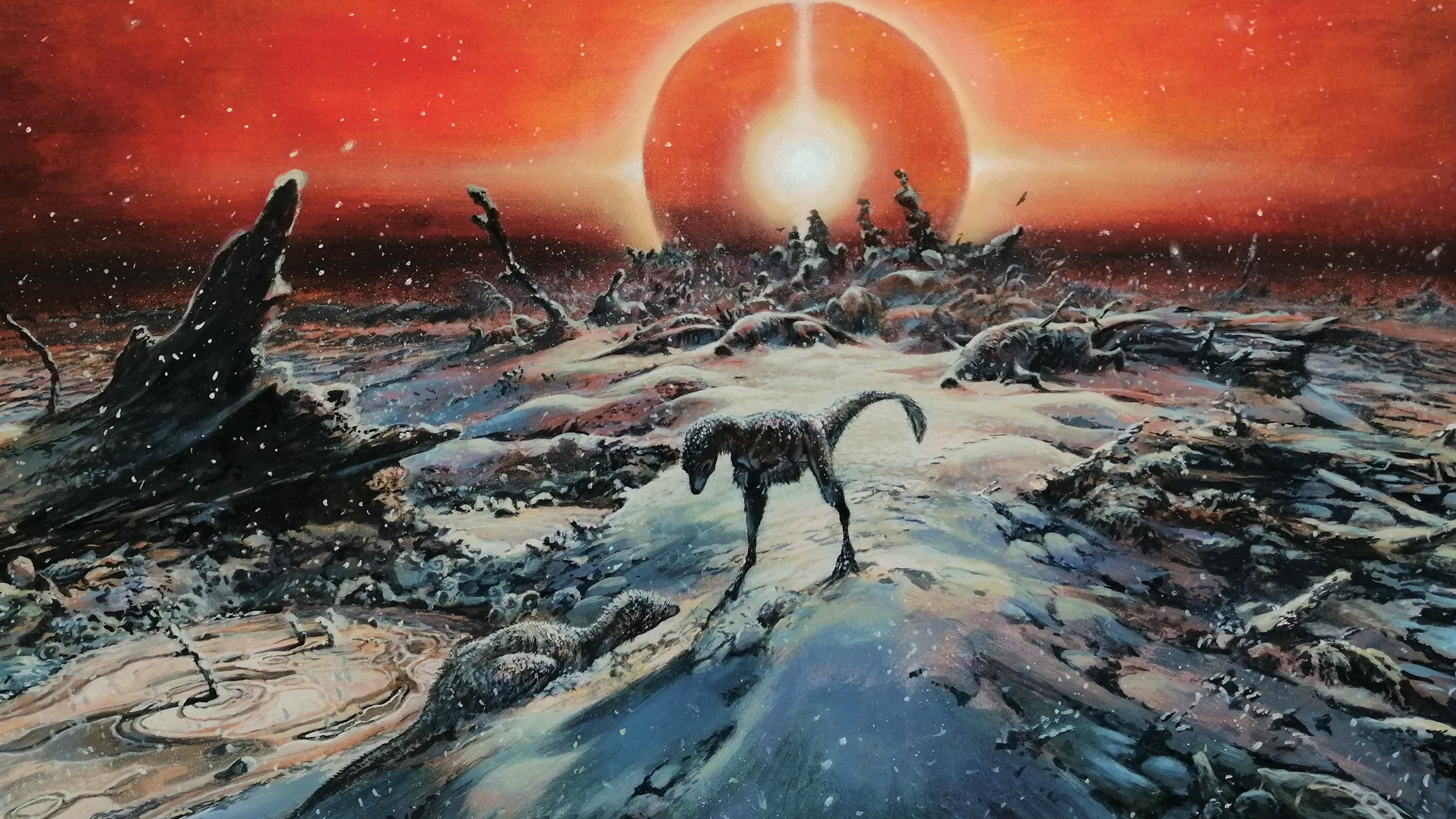
Supervolcanic Eruption
A VEI-8 eruption like Yellowstone could blanket continents in ash, collapse global agriculture, and trigger a volcanic winter lasting years. Probability: ~1 in 730,000 per year.
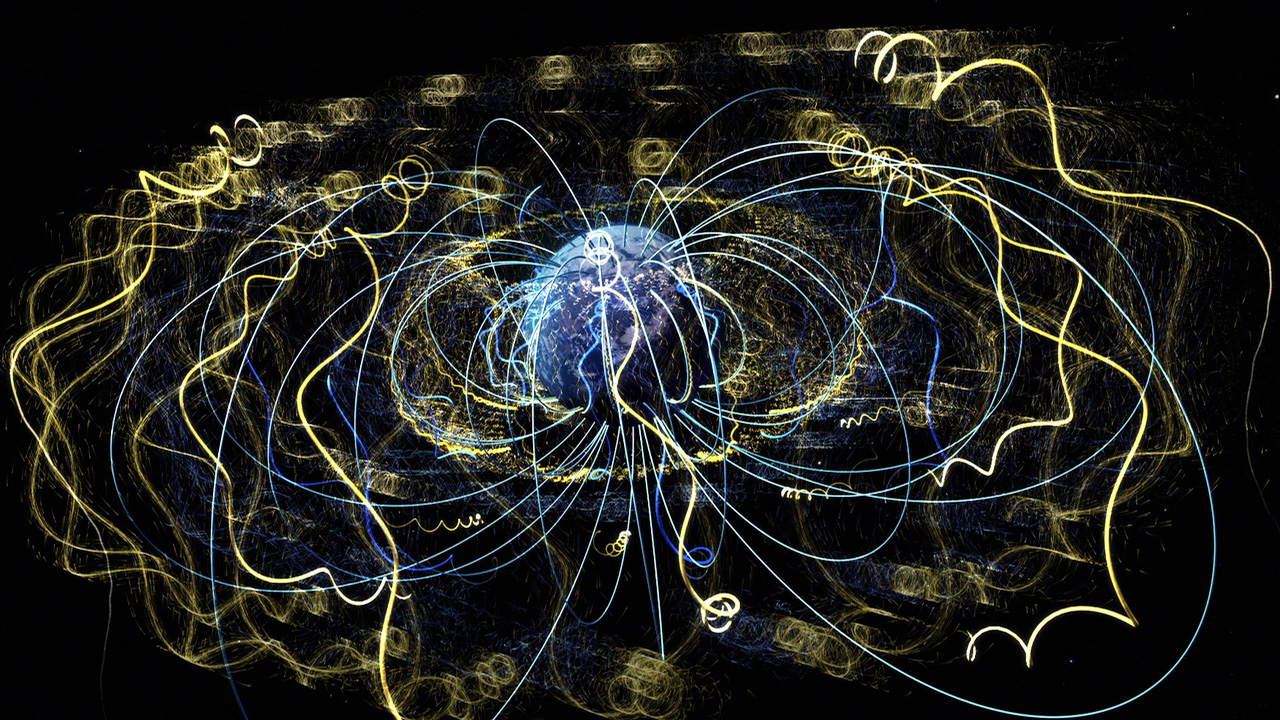
Geomagnetic Reversal
Earth's magnetic poles periodically reverse. During the transition, the weakened magnetosphere exposes the surface to increased solar radiation and cosmic rays.
Potential US Damage
The Invisible Threat from Our Star
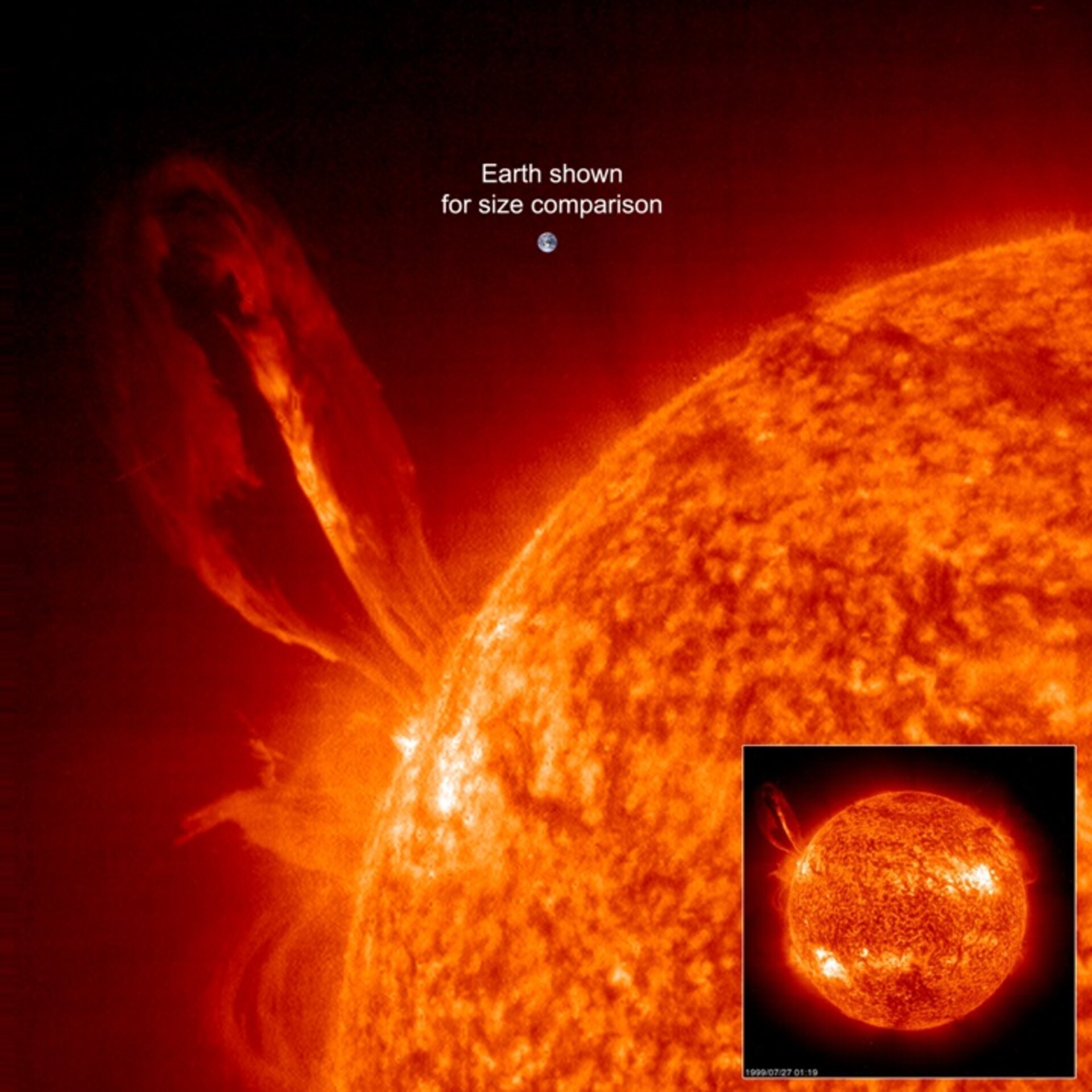
Coronal Mass Ejections can hurl billions of tons of magnetized plasma toward Earth at millions of kilometers per hour. A Carrington-class event today could disable power grids serving 20-40 million people for weeks to years.
In May 2024, Earth experienced its most intense geomagnetic storm since 2003 (G5-class), causing spectacular auroras and disrupting GPS and satellite systems—a stark reminder of our vulnerability.
Geomagnetically induced currents destroy high-voltage transformers
Radiation kills electronics in orbit, disrupts GPS and communications
HF radio, aviation comms, and internet backbone disrupted
After L1 detection, arrival can happen in under an hour
DART: Humanity's First Asteroid Deflection
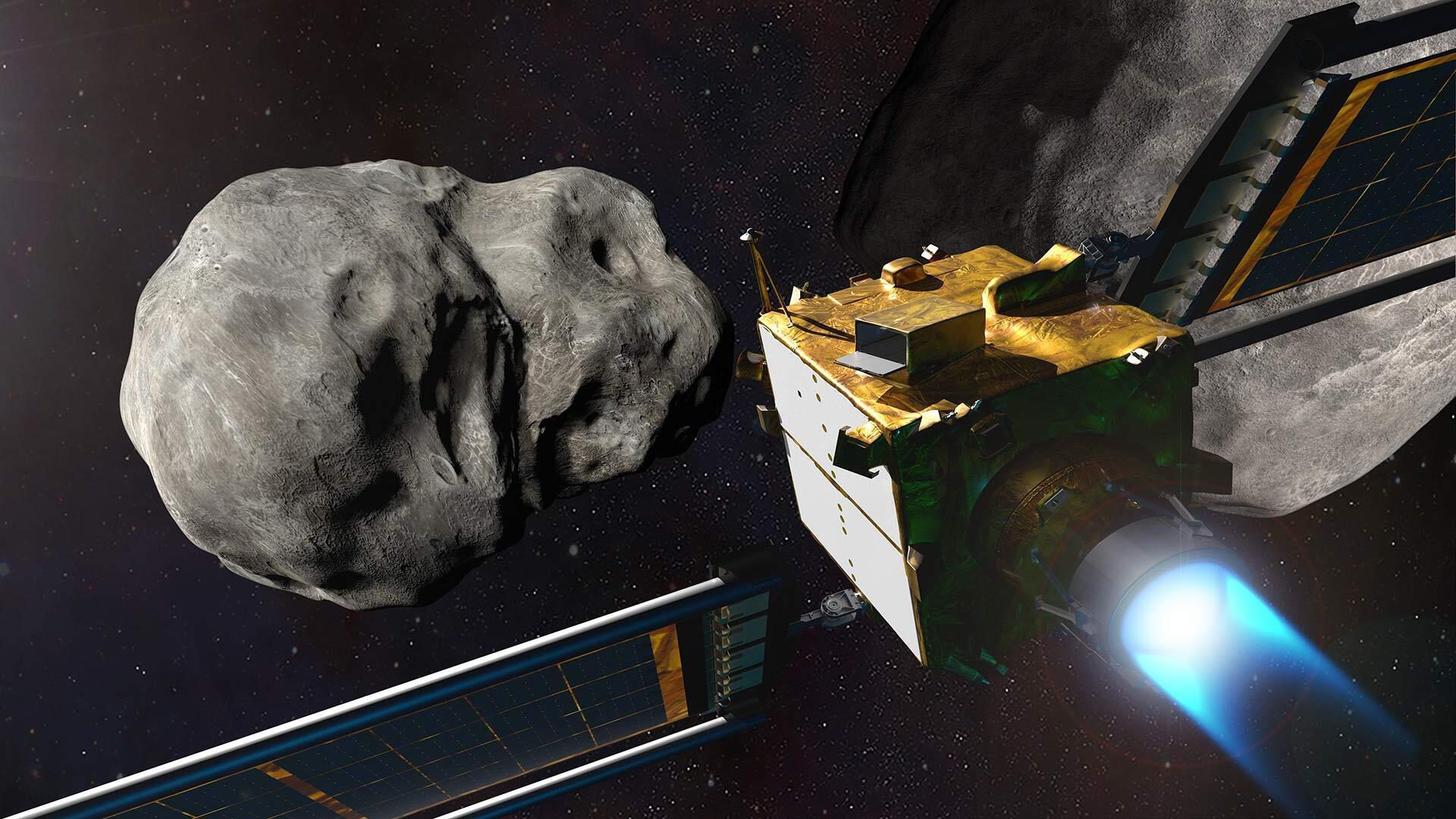
On September 26, 2022, NASA's DART spacecraft deliberately crashed into asteroid Dimorphos at 6.6 km/s. The kinetic impact shortened the moonlet's orbit by 32 minutes—over 26 times the minimum success threshold.
This proves that kinetic deflection is a viable planetary defense strategy. ESA's Hera mission, launching in 2024 and arriving in 2026, will conduct detailed measurements of the impact crater and momentum transfer.
Dimorphos
A 160m moonlet orbiting asteroid Didymos
32 minutes
Shortened orbital period (goal was 73 sec)
Hera (2026)
ESA mission to study DART crater & effects
Success
First planetary defense technology demo
Orbit Period Changed
Goal was only 73 seconds
Earthquakes & Tsunamis
The Ring of Fire accounts for 90% of earthquakes and 75% of active volcanoes. Subduction zone megathrusts generate the most devastating events.
Deadliest Earthquakes
Estimated death toll of major seismic events

Japan Earthquake & Tsunami, 2011
M9.1 • ~20,000 casualties
| Event | Deaths | Mag. |
|---|---|---|
| Shaanxi, China 1556 | ~830,000 | ~8.0 |
| Tangshan, China 1976 | 242,000-655,000 | 7.5 |
| Indian Ocean 2004 | ~228,000 | 9.1 |
| Haiti 2010 | 100,000-316,000 | 7.0 |
| Türkiye-Syria 2023 | ~60,000 | 7.8 |
Global Threat Zones
Explore seismic zones, volcanic hotspots, tsunami-prone coastlines, and major impact sites on an interactive global map.
How We're Fighting Back
Humanity isn't helpless. For every existential threat, scientists and engineers across dozens of nations are developing detection systems, defense technologies, and resilience strategies.
Planetary Defense Systems
Detect, track, and deflect threatening near-Earth objects
Readiness
Humanity's defense against asteroid impacts relies on a multi-layered approach: comprehensive survey telescopes to discover threats decades in advance, precision tracking to refine impact probabilities, and deflection technologies to alter dangerous orbits. The DART mission proved kinetic impaction works, and next-generation systems are rapidly advancing worldwide.
34,000+
NEOs Tracked
95%
>1km Cataloged
10+ years
Warning Time Goal
32 min
DART Orbit Shift
NEO Surveyor Space Telescope
In DevelopmentNASA's infrared space telescope (launching 2028) designed to discover 90% of NEOs larger than 140m—the threshold for regional devastation. Will find dark objects invisible to ground telescopes.
Kinetic Impactor (DART Legacy)
OperationalProven technology: slam a spacecraft into the asteroid at high speed to change its orbit. DART shifted Dimorphos' orbit by 32 minutes—over 26× the minimum success threshold. Effective with years of advance warning.
Gravity Tractor & Ion Beam Deflection
PlannedFor smaller or fragile asteroids: a spacecraft hovers nearby, using its gravitational pull or focused ion beam to gently nudge the object off-course over months or years. No physical contact needed.
International Asteroid Warning Network
OperationalIAWN links 40+ observatories worldwide to detect, track, and characterize potentially hazardous objects. Provides early warning and impact corridor predictions to governments within hours of discovery.
Planetary Radar Systems (Goldstone & Arecibo Legacy)
OperationalGoldstone DSN and Green Bank can bounce radar off asteroids to determine size, shape, rotation, and trajectory with centimeter precision. Critical for confirming or ruling out impact scenarios.
Nuclear Standoff Deflection (Last Resort)
PlannedFor large asteroids detected with short warning, a nuclear device detonated near the surface could vaporize material and provide a massive thrust. Studied by LLNL and NNSA as a contingency plan.
Countries Leading the Fight
United States
NASA Planetary Defense Coordination Office
Leads global NEO detection with the PDCO, funded the DART mission, and is building the NEO Surveyor telescope. Operates Goldstone radar for asteroid characterization.
European Union
ESA Hera Mission & Space Safety Programme
ESA's Hera spacecraft (arriving 2026) will study the DART impact crater on Dimorphos. The Space Safety Programme coordinates European NEO observations and develops the Flyeye telescope network.
Japan
JAXA Hayabusa Missions
Hayabusa2 successfully returned samples from asteroid Ryugu in 2020. The mission's kinetic impact experiment (SCI) tested surface disruption. Japan also contributes to the Subaru Telescope's NEO surveys.
China
CNSA Asteroid Deflection Test
China plans a kinetic impactor mission targeting asteroid 2015 XF261 around 2030. CNSA's near-Earth object monitoring and defense system is under active development.
Italy
ASI LICIACube & NEOShield
Italy's LICIACube cubesat flew alongside DART and captured impact images. Italian researchers lead the NEOShield project studying multiple deflection techniques.
Australia
Desert Fireball Network
World's largest fireball camera network covering 2.5 million km², tracking meteoroids and identifying fall sites. Data helps calibrate impact frequency models for the southern hemisphere.